Zone Defence and Man-to-Man: Two Different Maps of Responsibility
Zone defence vs man-to-man changes who guards space or an opponent. Follow one possession to see how each approach affects movement, help and rebounding.
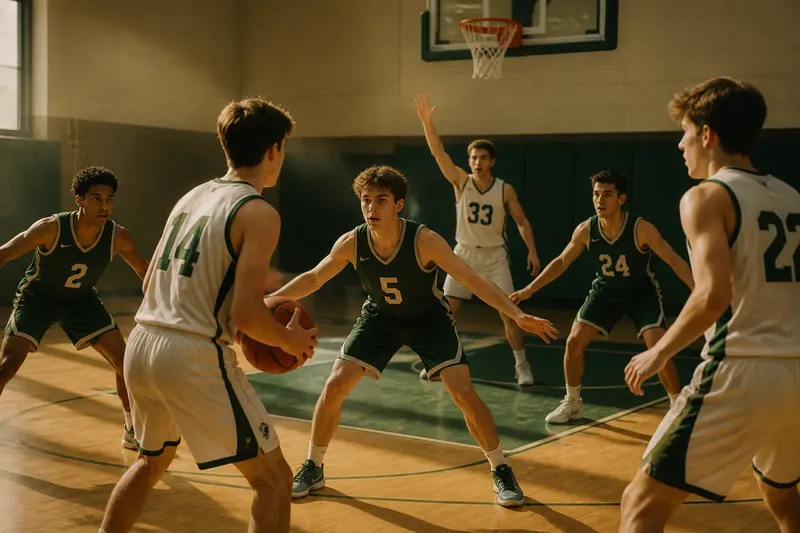
Why does a basketball defender sometimes follow one opponent across the court, but at other times hold a patch of floor? Zone defence vs man-to-man comes down to who is responsible for each threat: the player entering an area, or an assigned opponent. Follow one invented possession and you can see how that choice shapes the defence.
Zone defence assigns responsibility by area
Imagine a hypothetical school team defending a half-court attack. The opposition has a ball-handler at the top, a forward near each wing and a centre close to the basket. The coach has chosen a zone, so each defender begins responsible for an area rather than a named opponent.
The ball-handler passes to the right wing. The defender nearest that area steps out to contest the receiver, while a teammate shifts towards the gap left behind. The other defenders move with the ball and keep bodies between attackers and the basket. Their first question is, “Who is entering my area, and where is the next threat?”
That shared responsibility can help defenders protect the lane without following an attacker far from the action. The trade-off is that teammates must recognise when a threat moves from one area to another. If both assume the other will take a cutter, the attacker may find an opening.
Zone defenders move together as the ball travels
In the invented possession, the wing sends a pass towards the baseline. The defender covering that area meets the receiver, while a nearby teammate shades towards the basket and another watches the middle. They adjust like chairs being moved around a doorway: each change in position affects the space left open elsewhere.
A zone is not simply a set of fixed boxes. Defenders respond to the ball, cutters and players near the basket. Formations differ, but the common idea is that teammates share responsibility for territory and communicate as attackers move between areas.
A quick pass from one side to the other can make the defence shift across the court and leave a receiver with room to act. Rebounding calls for a decision too: when a shot goes up, each defender has to locate an opponent and make contact to contest position rather than assume a particular match-up is already in place.
Man-to-man assigns each defender an opponent
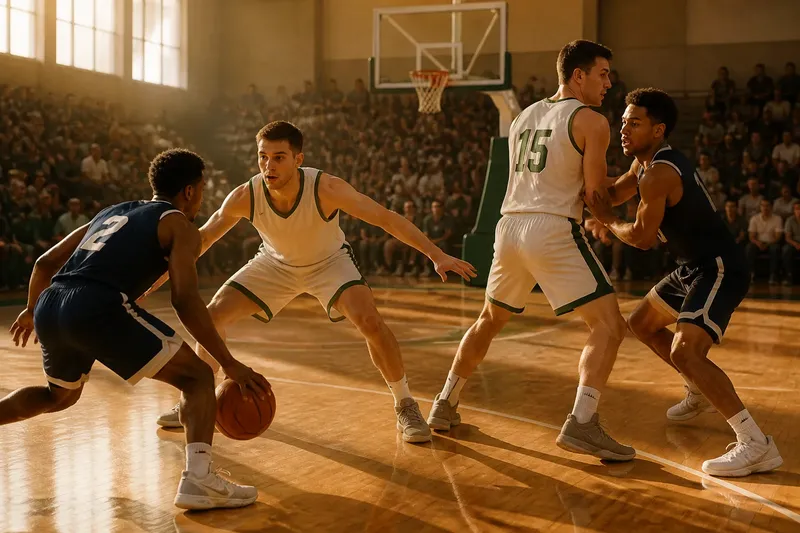
Replay the same invented possession with man-to-man defence. Before the ball moves, each defender has an assigned opponent. When the ball-handler passes to the right wing, the defender assigned to that receiver follows and contests the catch. The others stay alert to their assignments while watching for chances to help.
If an opponent cuts towards the basket, their assigned defender tracks the run rather than handing the player over at an area boundary. That makes individual responsibility easier to follow, though it does not mean defenders should ignore the ball or their teammates.
Man-to-man is not five isolated chases. A defender may help when a teammate is beaten, then recover to their assignment. If everyone watches only their own opponent, a gap can open; if two defenders turn towards the ball, another attacker may be left free. The map is personal, but the whole team still has to read the possession together.
The same cut creates different decisions
In the invented sequence, the right-wing attacker sees a teammate cutting through the middle and passes. In the zone, the defender covering the middle must recognise the cutter, while the previous defender decides whether to release the player or keep following. A clear hand-off can close the route; hesitation can leave space for a shot near the basket.
In man-to-man, the cutter’s assigned defender follows the run. That keeps a direct link between defender and opponent, but may pull the defender away from an area where a teammate needs help. Another defender may have to cover the threat and then recover.
Say the pass is delayed in this hypothetical situation. The zone defenders have time to shift towards the cutter, while the defender assigned to the cutter in man-to-man stays with the run and a teammate watches for a drive. The visible difference is how pressure forms: the zone closes space collectively, while man-to-man keeps a direct assignment, with neither arrangement ensuring a stop.
What clues distinguish zone defence from man-to-man?
How can you tell if a team is playing zone?
Watch whether defenders transfer attention as attackers cross areas, especially when the ball travels from one side to the other. A defender may meet a new opponent entering their area while a teammate takes responsibility for the player moving on.
How can you tell if a team is playing man-to-man?
Look for defenders staying responsible for particular opponents as those players move around the court. They may still help one another, but often return their attention to an assigned player once the immediate threat has passed.
Does zone defence mean defenders never guard individuals?
No. A zone defender still contests shots and passes and may stay close to an opponent in their area. The distinction is that responsibility is organised around space first, rather than following one opponent everywhere.
Is one approach always better?
No single approach suits every team or possession. Coaches weigh their players, the opposition’s movement, communication and the risks of leaving space or losing track of an attacker.
Rebounding shows how each defence finishes a possession
In the invented possession, the attack shoots from the right wing. Zone defenders turn to locate nearby opponents and contest the rebound; man-to-man defenders find their assigned opponents and box them out. In both cases, the defence still has to claim the ball or respond to what happens after the shot.
The practical difference is where responsibility starts. Zone defence organises shared attention around space and asks players to communicate through hand-offs and shifts. Man-to-man makes assignments more visible and asks each defender to track an opponent while remaining ready to help.
When watching basketball, follow a defender’s responsibility rather than relying on where they began. Ask whether they move with an opponent, pass that player to a teammate, or shift to protect an area. That is the clearest way to read zone defence vs man-to-man—and the different answers each gives to the same attack.